4 August 2026
THE SOUL BEHIND THE IMAGE
THE SOUL BEHIND THE IMAGE
Art of Magazine | Summer 2026 | By Daniel Chardon

“He photographed David Bowie, Kate Moss, Tupac and the mythology of an era. But Michel Haddi’s real story begins elsewhere: in survival, fatherhood, risk – and the belief that art can save a life.
THE SOUL BEHIND THE IMAGE
When Michel Haddi appears on screen, he has just come back from boxing. At 69, he trains every day. “I went boxing. I’m okay,” he says, with the humour, impatience and physical presence that will define the conversation.
There is nothing ceremonial about the beginning: sound problems, interruptions, laughter, sudden detours. Yet beneath the apparent disorder, a sharper portrait emerges. Haddi is not a nostalgic fashion photographer looking back at his golden years. He is restless, combative, disarmingly direct – a man who has lived through too many worlds to belong completely to any of them.
He speaks of North Africa, Paris, London, New York, Los Angeles, Saudi Arabia, Marrakech. Of orphanages and Vogue. Of fathers, sons, celebrities, AI, flowers, films and freedom. For Haddi, the past is not a museum. It is fuel.
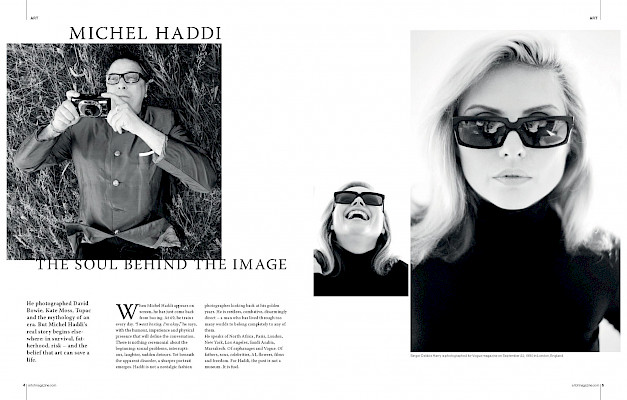
“London in the late 1970s struck him instantly as liberation. Paris, he says, was bourgeois. London was sex, drugs, rock’n’roll, Covent Garden, photographers, magazines, energy. “As soon as I arrived in London,” he remembers, “I said: this place is fabulous.”
He became an assistant in Covent Garden, connected to British Vogue and other major publications. “I want to work for Vogue,” he told himself. And so he did. By the mid-1980s, Haddi was working for Italian magazines, British and French Vogue. A major British Vogue assignment – he recalls receiving 45 pages one Christmas – brought calls from New York and Los Angeles.
For Haddi, the 1970s, 1980s and 1990s were the last great age of magazine mythology. “The time of the magazine was the seventies, eighties, nineties,” he says. “After, it went down.” In those decades, magazines could still be cultural stages. A photograph could stop time. But Haddi also remembers the politics of magazines: power structures, insecurity, the danger of becoming disposable once a younger, more obedient photographer appears. At one point, after being given too little space for his work in American Vogue, he walked away. The issue was respect”
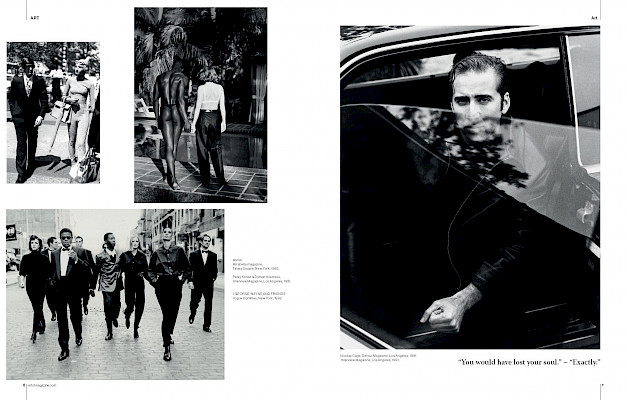
“Not Fashion, but Story
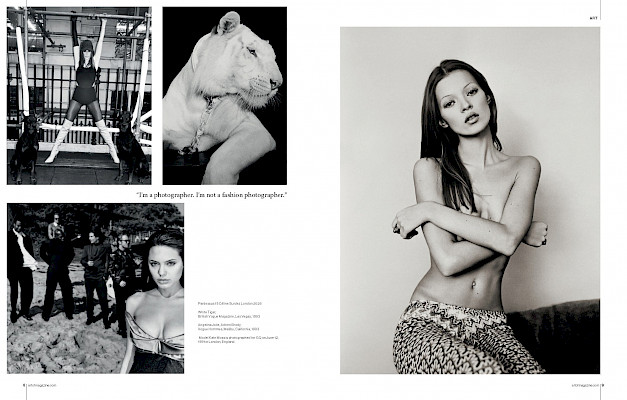
Ask Haddi whether he is a fashion photographer, and the answer comes with force: “I’m a photographer. I’m not a fashion photographer.”
Fashion, for Haddi, is not an end in itself. It is material. Clothing, body, light, setting, attitude, tension – all these are elements within a story. He speaks of Helmut Newton, Guy Bourdin, Chris von Wangenheim and Richard Avedon as storytellers. They did not merely photograph clothes. They constructed scenes, charged situations, psychological atmosphere.
For Haddi, beauty is never a question of perfection. A great picture, he suggests, needs one imperfection – the thing that makes it human. This is why many of his photographs feel cinematic: his subjects do not merely pose; they appear caught inside a story.
Los Angeles gave Haddi direct access to the machinery of myth: Hollywood, celebrity, money, speed, freedom. He photographed actors, musicians and cultural icons not as a fan, but as a professional with his own authority.”
“Haddi is not afraid of artificial intelligence. Before becoming a photographer, he studied mathematics, physics, electronics. Machines do not mystify him. Systems interest him. He still owns large-format cameras and works with film when he wants to. But he also uses digital tools, AI, NFTs and 3D spaces. For him, these are not betrayals of photography. They are extensions.
“AI is a tool, my friend,” he says. “If you are not an artist, it will be shit.”
A tool alone produces nothing. It takes taste, instinct, knowledge, experience, timing. Technology can generate worlds. It cannot replace the artist’s eye. It cannot carry a life.
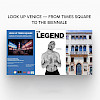
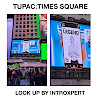
Film, too, has long been present in Haddi’s imagination. His photographs often behave like cinema; his films carry that impulse beyond the still image and into time – most recently through LOOK UP, an international curatorial project that, after Times Square, was set to travel to Venice in 2026.”
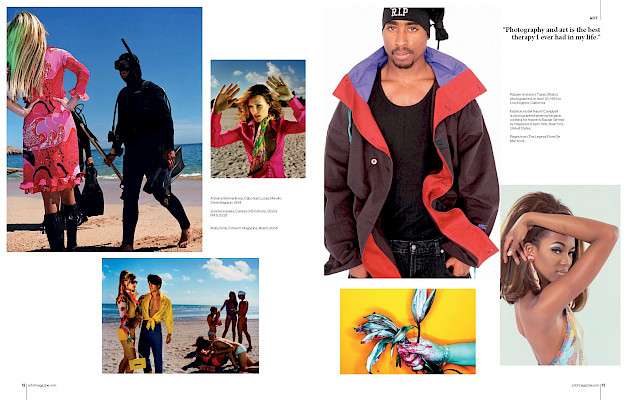
“For all his experience, Haddi still defends a form of innocence. Every session, he says, should feel like the first one. The moment you stop being surprised, you should stop photographing.
Asked whether his greatest passion is still portraiture, he resists the word. “Portrait” is too narrow, perhaps too static. What he loves is taking photographs. And film. People, fashion, celebrities, stories, flowers, bodies, movement, light – the whole thing.
He is not merely a fashion photographer, celebrity portraitist, publisher, filmmaker or survivor. He is an image-maker in the fullest sense: someone who turns experience into visual form, and visual form into freedom.
His photographs capture the aura of others. But his life reveals something equally compelling: a man who used images not to escape reality, but to transform it – and who still believes that somewhere ahead there is another picture, another face, another story waiting to be seen.”
View the full article at https://artofmagazine.com/emagazine/
Follow on Instagram: @michelhaddistudio
All images ©Michel Haddi